Sunday, January 11, 2015

All About the Keystone XL Pipeline

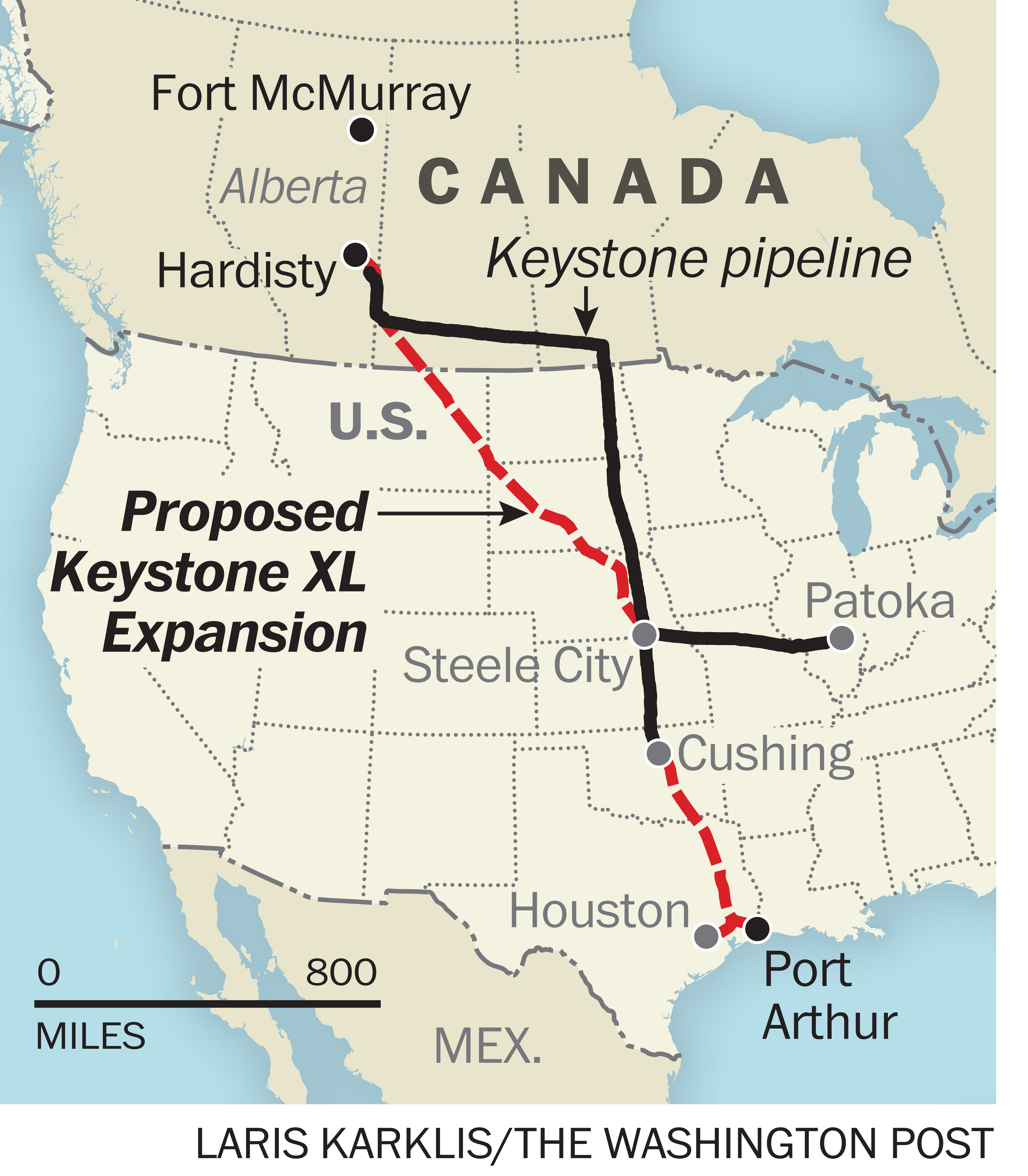
If you pay attention to the news, you have probably heard about the Keystone XL Pipeline. It was a big issue in 2014 and it has now continued into 2015. If you have not heard about it, it is a 2,000 mile pipeline that flows oil produced by tar sands in Canada and it runs all the way to Texas. Many people are for it because of the 120,000 jobs and increases the about of oil we produce domestically so oil will be cheaper. If you're an advent reader of my blog, you know I am interested in anything to help the environment, and so I wanted to see why environmentalists were fighting the Keystone XL Pipeline. An article by the Labor Network for Sustainability really had some great points.  It said that "To produce one barrel of heavy crude oil from tar sands requires strip mining the forest, extracting four tons of earth, contaminating two to four barrels of fresh water, burning large amounts of natural gas, and creating vast holding ponds of toxic sludge." Now I see why Republicans are mainly for the Keystone is because they do not care about the environment. This project is taking down trees and destroying habitats for animals. And what happens if there is an oil spill? There will be oil over 2000 miles of land! I know people need jobs, but is it worth the risk? I do not think so. People are putting jobs over our beautiful environment. Another point the article talks about are the rising greenhouse gas emissions and this project will increase them even more due to the deforestation and burning of coal.


Last week there were big news about the Keystone XL pipeline. In the article "Obama Facing Rising Pressure on Keystone Oil Pipeline" from the New York Times discussed how the House passed a bill approve the Keystone in Nebraska. The final vote was 266 to 153. The representatives who supported it said that the pipeline will bring 830,000 barrels of oil per day to the Gulf Coast, creates jobs and adds 3.4 billion to the economy, is domestic, and it does not increase greenhouse gases as much as environmentalists said it does. Another claim they have is that it will not destroy much of the environment. The Nebraska governor approved it after the pipeline company, TransCanada, changed its route to avoid the Sandhills region. Even with all these great pros I still doubt their sources and I hope the President vetoes it. We need to protect the environment and the Keystone Pipeline will destroy it. We should be moving away from oil, not try to get more of it. It would be best to invest in renewable energy, and I hope President Obama thinks the same way.

Sunday, January 4, 2015

Hydrogen Fuel Cell Vehicles

In my other articles I have discussed electric cars and gasoline-powered cars, but have you ever heard of a hydrogen fuel cell car? Using hydrogen as a power source is not  really a new technology-NASA has been using it for 50 years-but now Toyota is now using that fuel for cars. Hydrogen fuel cars work like this: 

I think it is so fascinating how we could just use water to power a car. It has no emissions so it is amazing for the environment. I think it is kind of weird for water to leak on the streets. I know this will be way ahead in the future, but what if everyone gets a hydrogen car, then there will be a lack of water, and cause corrosion of the streets and our sewers will get full. I read a really cool article from the magazine Bloomburg BusinessWeek called "The World's Biggest Car Company Wants to Get Rid of Gasoline." That title really got my attention, so I was excited to read it. It discussed Toyota's huge move to create the first mass-produced hydrogen car called the Toyota Mirai.
It has a driving range of 300 miles and emits only heat and water. It is on the market in Japan, but does not go on the market in the U.S. until the end of this year with a price tag of $62,000. It does not go pretty fast. The problem with hydrogen fuel cell cars-sometimes the same problem as electrics-are the lack of fueling/charge stations. There only 8,849 electric stations and 21,916 charging outlets in the U.S. And since hydrogen fuel is so new we only have 20 stations in the whole U.S., mostly in California. There are a lot of other car companies like Tesla who really question the reliability and benefits to the environment hydrogen fuel cars have. I feel like scientists should gather more evidence to settle this dispute. Another problem the article discusses is that even though they have gotten the price of hydrogen lower, making it cheaper than gasoline and electricity, hydrogen can be a very dangerous fuel. It is highly explosive which is very scary to me. Imagine if there is a gas leak on the road, there is a chance the car could explode! Toyota said they handled most of those issues, but I am still not 100% about trusting them. For me this car is so new, and nothing has come out like it, and so I do not know how it is actually going to be. Hydrogen is not easily made into fuel, and we do release emissions while changing it into a fuel. We need to reduce our emissions, global warming is upon us, and I really admire Toyota for being different and trying to help the environment, but we will just have to wait and see how successful these cars are in the long-run.


tesla prettier
Sunday, December 21, 2014

Bioenergy


Bioenergy is energy from living materials such as plants, wood, and waste. It is the biodegradable fractions of products, wastes, and residues. Therefore, it is a renewable energy source. Plants are the most used source for bioenergy because they are the easiest to grow. Carbon dioxide gets removed during photosynthesis and the net emission of CO2 could be equal if we keep replenishing plants for bioenergy. Biofuels convert biomass into fuel for transportation, biopower burns biomass to generate electricity, and bioproducts are products made from converting biomass into chemicals. America is really trying to improve bioenergy and make it used more frequently all over the United States. It is the most used renewable energy technology in the U.S. by a huge amount.
In an article on energy.gov called "Energy Department Announces $7 Million to Develop Advanced Logistics for Bioenergy Feedstocks" it talked about how that money is going towards two projects to help reduce the costs of transporting biomass to biorefineries. Sometimes the places where they grow the biomass are so far away from the refineries and so they are transported on trucks(with bad gas mileage) on long distances to the refineries. With this project, we could reduce the costs of biomass so that if we make biofuels it would be a lot cheaper than gasoline. They are developing better technology for more efficient and lower-costing harvesting, collection, and transportation of biomass. I am really happy about this news because we are using so much biomass, but we should always look for ways to how to improve the process. They are also using two colleges for help on the project which I think is really cool because it gives them more experience for their future careers.
And the U.S. Department of Energy is not stopping with that project! They are donating $14 million for another biomass project. In another article by energy.gov it said they are using "landscape design approaches that maintain or enhance the environmental and socio-economic sustainability of cellulosic bioenergy through the improvement of feedstock production, logistics systems, and technology development." Their focus is making renewable energy more commercialized and reducing carbon emissions. An example would be using corn for fuel and water quality by improving agricultural residue. Energy is a business and I think is good news that they are using biomass in not only its energy form, but also making the landscape better as well. They are making our technology more efficient which will lower costs so that renewable energy can be more abundant and cheaper. Obviously the U.S. is moving towards biomass and it is no surprised why.

Sunday, December 14, 2014

Nuclear Energy

Nuclear energy is America's third-largest source of electricity after coal and natural gas. Nuclear plants produce electricity by boiling water into steam which spins turbines. To create nuclear power we use uranium fuel which contains solid ceramic pellets, and the process is called fission. Nuclear energy is a renewable source and it produces no greenhouse gas emissions. The problem with nuclear energy is the radioactive waste it produces which takes years to finally decompose and the accidents that may occur.
In the article, "Before We Close More Nuclear Power Plants, We Need A National Conversation" (Fox News) it explained the problems with nuclear power in the U.S. More nuclear power plants are closing due to "sluggish demand for electricity, the onset of cheap natural gas, electricity markets that do not sufficiently value low- or zero-carbon electricity sources and an aging, constrained transmission system." There are also public concerns on disasters.  I feel like most of the U.S. does not care about clean energy and the world deteriorating. Everybody cares about natural gas too much and that is not renewable. Like I said in my other posts non-renewable sources should pay higher taxes, and more money should be going to renewable sources to create better carbon-free energy technology. If we shut down more nuclear power plants, we would be taking away thousands of jobs and the CO2 will increase dramatically.
In another article I read from US News was called "Despite New Plants, Nuclear Future Still Decades Away." We have just opened two brand-new nuclear energy plants! This is great news. We have not created a new power plant in 30 years and now we have two new ones! But it did cost 15 Billion which is a lot of money, but was totally worth every penny because it makes peoples energy bills go way down and it is clean electricity. There is a future in nuclear energy and the U.S. Department of Energy sees this. They are allotting 450 million to two new projects which will take about ten years to complete. The Environmental Protection Agency is now trying to make laws for stricter emissions limits for coal-fired power plants. It will make coal producers to install new technology which will make the price of coal go up by about 75%.
Even though there are many doubts about nuclear energy it will one day surpass coal as the biggest producer of electricity and the world will be a much cleaner place to live.

Sunday, December 7, 2014

Wind Energy


Wind energy provides only 2% of the total electricity supply. The United States is trying to improve that because it is clean energy, but so many people are really against it including environmentalists. An article by Fox News called "It May be Lights Out for the Wind Energy Come the Midterms." In the article it talked about how wind energy makes peoples' taxes go up. It says a study shows that the states with the most wind farms have the highest electricity bills. The Production Tax Credit is a federal programs that gives out billions of dollars annually to renewable energy companies. To pay for the wind farm taxpayers have to pay taxes for it for ten or more years. The League of Conservation Voters has deep ties with the American Wind Energy Association and some of them are on their committee and together they are a powerhouse.
I did not know that Republicans cared so much about the environment, I thought mainly Democrats only did. But the article does make a good point that the Republicans are getting so much money from the wind energy companies, so they might not even care about the environment, only the money. It is more like a business to them. I really want the U.S. to push towards renewable energy, and wind is a great option in the Midwest, but we need to find better ways to make it cheaper because it is ridicules how we have to pay millions for it and taxpayers have to suffer from it when clean energy should be helping people.
Another article I read from Fox News was called "Bird Conservation Group Challenges Feds Over Wind Farm Eagle Deaths." The American Bird Conservancy has a lawsuit against Obama for giving wind energy companies land permits to kill bald and golden eagles and they are not getting prosecuted by the government. It is for Obama's plan for green energy, and he is giving them permits for thirty years. Wind turbines blades can go up to 170 mph making it like a deadly tornado. Wind Farms in 12 states together have killed about 250 eagles. The U.S government has only sued one company in Wyoming for killing eagles and other birds from their wind farms.
Wind energy reduces greenhouse gas emissions and in the U.S. provides clean energy to 15 million homes. In January of 2015 a law in Colorado will take effect protecting the birds and other wildlife from wind energy. It is the first law in the U.S. of that kind.
I did not realize wind energy is killing this many species. Bald eagles have just gotten off the endangered species list and I definitely do not want them on it again. I was totally for wind energy because it is clean and green, but I am totally rethinking it now. I knew there is always drawbacks to everything, but I did not know they were this bad. Maybe we could use other designs like bladeless wind turbines like the Dutch's Ewicon, so that no other animals get killed.

Sunday, November 30, 2014

The World's Largest Solar Farm


Topaz Solar Farm in California is up and running


The world's largest solar farm is now up and running! This is very exciting news, not only for the U.S., but the whole world. The Topaz Solar Farm in Carrisa Plains, California is a 550-megawatt plant producing enough electricity to power 180,000 homes. The total cost was 2.5 billion dollars. That may seem like a lot of money, but it was totally worth it. "It will displace 377,000 tons of CO2 annually—equivalent to taking 73,000 cars off the road. It will provide $192 million in compensation for approximately 400 construction jobs over a 3-year period; $52 million in economic output for local suppliers and $14 million in sales taxes during construction and up to $400,000 per year in new property tax revenues." These numbers are amazing! Even though it did cost a lot of money for it to get started, all the advantages it has now since it is running are incredible. The solar farm consists of 8 million modules covering 4,700 acres. The area where the panels are at is a desert-like climate, so there is limited productivity there. There are small amounts of vegetation and species there, but there are thousands of arid acres in this general area. The panels are rotated throughout the day, so that they are always in direct sunlight. It mainly just runs on the sun, and there is no water used in production. It will probably run for twenty or more years. On Right This Minute, the newscaster talked about how we needed to find a way to condense solar panels, but still making them efficient. These solar panels took up so most space, and still are not efficient. Another point he mentioned was that we are taking advantage of the blue skies of California by using solar panels there, but solar panels are less efficient in other states because there is not so much direct sunlight. On The Street, Dan Dicker mentioned that the United States should move to residential smaller scale solar panels. The reason for this is because he want all homes to use renewable energy then we can work on larger scale projects. I agree with him because our houses are so inefficient, and we need to find out ways to use solar panels in cities who do not get as much sun as California. On Mad Money, the CEO of  First Solar (the company who did the Topaz Solar Farm) was a guest on the show. He said how solar panels are moving towards the right direction. Solar energy grew by 7.9% globally and are now 20% efficient. By next year there will be 50 gigawatts more of solar energy. In the next five years solar will probably provide 5% of the world's electricity.
Solar energy is the future. It is clean and sustainable. It is abundant, good availability, lowers the cost of electricity, used for many different ways, is silent, and low maintenance. But there are many cons. The expense is ridicules, costing a couple billion dollars to make the technology. It is sometimes not effective because the sun is not always shining brightly, and it takes up a lot of space. People also say that transmission lines are ugly, but if people want electricity, they have to be there. Of course I am pro solar energy and I am satisfied with the progress we have made, but there is always more that we can do.


Sunday, November 23, 2014

The U.S. Endorses Hydropower

Hydropower is using water to make electricity. They get the power from the kinetic energy at it moves downstream. The water goes to a turbine then a generator and convert it into electricity. That electricity runs on the grid to homes, and other buildings. Hydropower is 100% renewable because it is from water which is great for the environment because it releases no emissions. On the top of the dam is the reservoir where the water gets flowed down to the bottom level. The outflow of the water has lots of animal and marine life like vultures and herons. One of the coolest things about some of the hydropower dams are the fish elevators. They have them so that the fish that went down the dam can go back up to the reservoir. When I went to Conowingo Dam in Maryland they had a building that was next to the waterfall and it had a glass wall so that you could see the fish swim past you. It was so cool! It was hundreds of fish swimming in the elevator at once.
 The problem with the United States is that we have so much water, and not enough hydro-electric dams. We are not using the natural resources we have. For example, the Mississippi River. But there is good news. The U.S. Department of Energy is finally realizing all the pros of using hydropower. There are 80,000 non-powered dams in the U.S. alone. We have so many, but we are not even using them. This is ridiculous! The U.S. could be using so much more renewable energy. If we powered them we could get 12,100 megawatts. It would be 1.5 millions megawatts annually. The Department of Energy is now giving out billions dollars of loans to get that technology working again. This project is part of Obama's Climate Action Plan to cut GHGs and pollution.
Even though hydroelectric dams have many positives like clean, renewable energy and low maintenance costs, there are always drawbacks to everything. The dams take up a lot of space, destroy some of the environment to build them like trees which increases the C02, they flood, and there are high initial costs. I feel like the pros outweigh the cons, and I  think the U.S. is moving towards the right direction.